

MN Lakes Boating - Boat Registration - Boating Equipment Brainerd MN
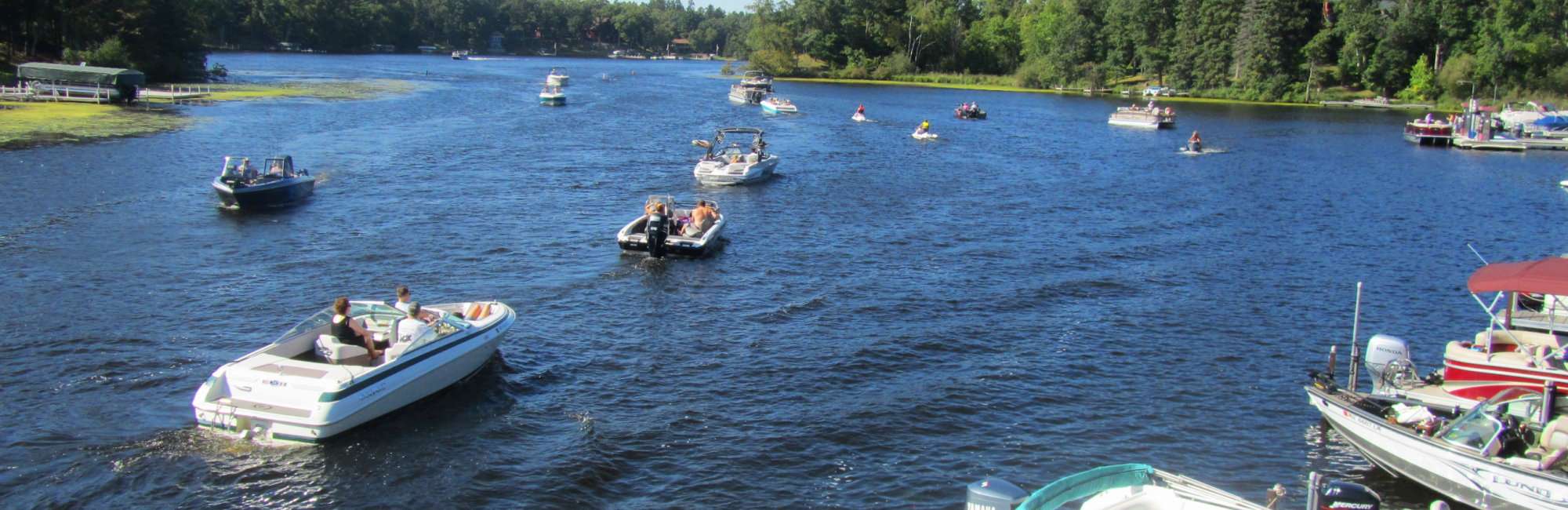
In the "Land of 10,000 Lakes," Brainerd, MN is the central location for boating in Minnesota. With more than 500 MN lakes and rivers and the famous Mississippi River, the Brainerd area boasts beautiful lake scenery, plenty of fish, and everything that you need for a MN Lakes boating trip from boat rental to fishing guides! Brainerd is famous as the prime Minnesota Vacation and Resort location and offers many recreation options. Get on the water for a relaxing pontoon ride, a quiet fishing excursion, an exhilarating skiing or wakeboarding outing, or a simple cruise around the lake. Jetskis and waverunners are also a popular way to enjoy the water and are available for rental at many area locations.
Boat and Water Safety
Motor Craft License -
All motorized and non-motorized watercraft must be licensed by the Department of Natural Resources (DNR). The types of watercraft that must be licensed include, but are not limited to, motorboats, rowboats, sailboats, sailboards, canoes, kayaks, paddle boats, rowing shells or sculls, all-terrain vehicles used in the water, and inflatable craft.
Required Equipment -
- Personal Flotation Devices (Life Jackets)
There are five types of personal flotation devices (PFDs or life jackets) approved for use on recreational boats.- Life Jacket Requirements - The following personal flotation device (PFD) requirements are effective for all waters within and bordering Minnesota. There are new federal regulations for children under 13 years of age requiring life jacket wear in certain cases.
- The requirements for PFDs are as follows - On all boats (except a sailboard) regardless of length (including canoes, kayaks and duck boats), there must be a readily accessible U.S. Coast Guard approved Type I, II, III or V wearable PFD (life jacket) for each person on board. Type IV throw able devices, such as buoyant cushions, are no longer acceptable primary lifesaving devices.
- IN ADDITION, on boats 16 feet or longer(except canoes and kayaks,) there must also be at least one U.S. Coast Guard approved Type IV throw able device, such as a buoyant cushion or ring buoy immediately available for each boat. The law does not state that PFDs must be worn, only that they are readily accessible except for personal watercraft (water scooters, Jet Skis, etc.). HOWEVER... The MN DNR highly recommends that PFDs always be worn by everyone on board any boat. Check the label on the PFD to make sure it is a U.S. Coast Guard approved flotation device and what type of device it is.
- Navigation lights are required from sunset to sunrise.
- USCG approved fire extinguishers are required on boats. All fire extinguishers must be U.S. Coast Guard approved, fully charged, and readily accessible. enclosed fuel or engine compartments.
Mufflers/Noise Limits
All watercraft motors must have a muffler, underwater exhaust, or other device that adequately suppresses the sound of the motor.
For more Boating and water safety information you can read the Boating Guide from the MN DNR.
Information provided by the Department of Natural Resources
Harmful Exotic Species
If you are a water recreationist—boater, angler, water-skier, sailor, or canoeist—there are some important things you can do to prevent the transport of harmful exotic species from one lake or river to another. In Minnesota it is illegal to transport harmful exotic species.
- Inspect your boat, trailer, and boating equipment (anchors, centerboards, rollers, axles) and remove any plants and animals that are visible before leaving any waterbody.
- Drain water from the motor, live well, bilge, and transom wells while on land before leaving any waterbody.
- Dispose of unwanted bait in the trash. Never release live bait into a waterbody, or release aquatic animals from one waterbody into another.
- Wash then dry your boat, tackle, downriggers, trailer, and other boating equipment to kill harmful species that were not visible at the boat launch. This can be done on your way home or once you have returned home. Some aquatic nuisance species can survive more than 2 weeks out of water, so it is important to: rinse your boat and equipment that normally get wet with hot (at least 40° C or 104° F) tap water; or spray your boat and trailer with high-pressure water; or dry your boat and equipment for at least 5 days, before transporting to another waterbody.
- Learn what these organisms look like (at least those you can see). If you suspect a new infestation of an exotic plant or animal, report it to your natural resource agency.
- Consult your natural resource agency for recommendations and permits before you try to control or eradicate an exotic "pest." Remember, exotic "pest" thrive on disturbance. Do-it-yourself control treatments often make matters worse and can harm native species. For more information, contact the DNR Exotic Species Program, Section of Ecological Services 888-646-6367.